Decarbonisation not a ‘grudge’ initiative

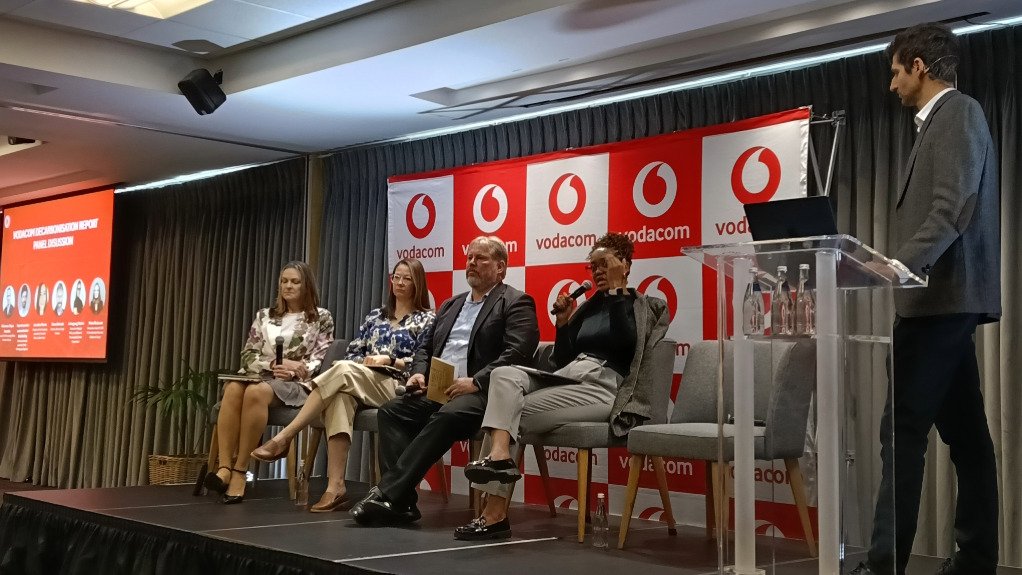



Decarbonisation is not a grudge move just to meet climate targets – it is an important tool for achieving Africa's digital economy and overall development goals, with major cost and energy security advantages.
This is one of the messages that emerged from a environmental, social and governance (ESG) discussion centred on Vodacom’s ‘Decarbonising Africa’s ICT Sector’ White Paper on Wednesday, which also featured a panel of experts discussing how, as climate pressures intensify and energy demand grows, Africa must cut carbon emissions while expanding access to reliable, affordable power.
Moderated by energy transition analyst and The Progress Playbook editor Nick Hedley, the panelists included Carbon Trust Africa cohead and energy and climate policy specialist Jarredine Morris; African Energy Futures director Steve Nicholls; Presidential Climate Commission policy and research executive manager Lebogang Mulaisi; and Vodacom Group ESG and sustainable business executive head Nola Richards.
Vodacom Group CTO Dejan Kastelic, opening the event, said that in many African countries, energy infrastructure, utility financing, regulatory environments and electricity were still evolving.
Amid weak grid infrastructure, financial constraints within utilities, complex regulatory environments and unreliable electricity supply, the adoption of renewable energy across the continent is slow, and many sectors, from telecommunications and healthcare to mining, logistics and manufacturing, rely heavily on carbon-intensive diesel generators to power operations.
“The need for resilient, reliable and sustainable energy has never been more critical. Energy is no longer just an operational requirement; it is a strategic enabler of Africa's digital future,” he said, pointing out that this was the context behind Vodacom’s White Paper, which was developed with technical support from the Carbon Trust.
The paper draws on sector analysis, case studies and interviews with stakeholders across the information and communications technology and energy value chains, including utilities, technology providers, financial institutions and regulators.
“The findings highlight both the scale of the opportunity and the complexity of the challenges ahead.”
Africa remains particularly vulnerable to the impact of climate change, and the continent faces the dual task of reducing greenhouse-gas (GHG) emissions and pollution while continuing to expand access to reliable, affordable energy solutions that support socioeconomic development, jobs and digital inclusion.
While the White Paper was set within the context of the telecommunications sector, it sets out several practical pathways that cut across sectors: energy sector reforms that enable greater private sector participation, renewable energy procurement mechanisms such as power purchase agreements, and expansion of decentralised energy solutions such as mini grids to provide power to remote locations.
Across many countries, maintaining network resilience has required significant investment in backup power and energy infrastructure.
“On a positive note, the report also shows that meaningful progress is possible even in energy-constrained environments, and Vodacom’s own journey is offered as a case in point - as a technology business, energy is fundamental to everything we do,” he added.
Despite significant network expansion to bring connectivity to underserved communities and support growing digital demand, Vodacom continues to reduce its scope 1 and 2 emissions market-based market GHG emissions through energy efficiency improvements and renewable electricity procurement.
In the past financial year, the group matched 100% of grid electricity purchased with electricity from renewable sources.
Alongside this, all its operating companies maintained the ISO 50001 certification, which is an energy management certification, helping to improve energy efficiency and optimise energy use across Vodacom’s networks.
Ongoing network optimisation has improved the efficiency of data delivery across the network, with energy intensity improving to 0.27 MWh per terabyte of data, a 20% reduction on the prior year.
“This means we are using less energy to support every terabyte of data carried across our network. Beyond our footprint, we supported customers in avoiding 3.6-million tonnes of CO2 equivalent, a 35% improvement compared with 2025,” Kastelic continued.
Vodacom also partnered with Eskom in 2023 to develop virtual wheeling, a mechanism that connects renewable energy independent power producers with buyers across multiple sites, including those serviced to municipal grids.
“This model expands access to renewable electricity well beyond the limits of traditional infrastructure. The pathway forward is clear: through greater energy efficiency, expanded access to renewable energy, decentralised energy solutions and stronger cooperation across sectors, we have a real opportunity to accelerate transition to a lower carbon future while supporting growth and development.”
Hedley, delivering the keynote address and unpacking the landscape further, said that while much progress had been made on bending the emissions curve, the world was still facing catastrophic climate change.
The 1.5 oC target, dubbed the “safe limit”, is out of reach. However, every fraction of a degree from here has significant repercussions, and the fight is far from over.
The world remains on an “incredibly unsustainable trajectory” in terms of waste, with only 6.9% of the material entering the global economy every year recycled or reused. The other 93% is extracted, used once and then discarded.
However, the world's electricity system is now changing rapidly, with non-fossil sources nearing 50% of the global electricity mix, and coal's share of global electricity dropping to 32% from 35% in 2020.
In 2020, wind and solar made up just 9% of the world's electricity mix. Now they account for 20%, and the fleet of batteries supporting those wind and solar farms is exploding in size.
Rooftop and mini grid solar is helping to close the electricity supply gap in sub-Saharan Africa, and in 2026, Africa will install 17 GW of solar, a 45% increase in a single year – and expanding Africa’s total installed power-generating capacity by 6%.
“In some places, the growth is really mind blowing. In the Democratic Republic of Congo, growth year-on-year is 544%, and there are plenty of other countries that are seeing similar growth,” Hedley pointed out.
“South Africa used to be the main driver of growth in solar installations in Africa, but now it is a much bigger, continent-wide story.”
Further, Africa's monthly imports of batteries from China reached $391-million in July, which is double the amount from a year before.
Despite the progress, and the continent’s leapfrogging of the old electricity model in some ways, progress has been too slow in expanding electricity access and modernising power grids and policies, and a long road ahead remains.
Africa’s digital – and broader – economy cannot grow without reliable and affordable energy, and the continent’s energy system must by vastly expanded, and gradually decarbonised as well.
“To rapidly expand access to affordable electricity and to facilitate the growth of the digital economy, a much more holistic approach is needed.”
Hedley highlighted the potential of rapidly growing distributed solar, which was one of the big success stories, however, that alone was not enough, and there were still steep challenges to the development of options such as mini grids, which were critical to closing the gap.
Achieving universal access to affordable electricity by 2030 requires bringing connections to 90-million people a year, which is triple the current rate, while moving to a low-carbon power system is critical for long-term trade and economic competitiveness.
Article Enquiry
Email Article
Save Article
Feedback
To advertise email advertising@creamermedia.co.za or click here
Projects
Latest Multimedia
Latest News
Showroom

Supplier & Distributor of the Widest Range of Accurate & Easy-to-Use Alcohol Breathalysers
VISIT SHOWROOM
Established in 1933, EKATO is the world leader in agitation technology, supplying agitators for processes and applications such as chemicals and...
VISIT SHOWROOM
Press Office
Announcements
What's On
Subscribe to improve your user experience...
Option 1 (equivalent of R125 a month):
Receive a weekly copy of Creamer Media's Engineering News & Mining Weekly magazine
(print copy for those in South Africa and e-magazine for those outside of South Africa)
Receive daily email newsletters
Access to full search results
Access archive of magazine back copies
Access to Projects in Progress
Access to ONE Research Report of your choice in PDF format
Option 2 (equivalent of R375 a month):
All benefits from Option 1
PLUS
Access to Creamer Media's Research Channel Africa for ALL Research Reports, in PDF format, on various industrial and mining sectors
including Electricity; Water; Energy Transition; Hydrogen; Roads, Rail and Ports; Coal; Gold; Platinum; Battery Metals; etc.
Already a subscriber?
Forgotten your password?
Receive weekly copy of Creamer Media's Engineering News & Mining Weekly magazine (print copy for those in South Africa and e-magazine for those outside of South Africa)
➕
Recieve daily email newsletters
➕
Access to full search results
➕
Access archive of magazine back copies
➕
Access to Projects in Progress
➕
Access to ONE Research Report of your choice in PDF format
RESEARCH CHANNEL AFRICA
R4500 (equivalent of R375 a month)
SUBSCRIBEAll benefits from Option 1
➕
Access to Creamer Media's Research Channel Africa for ALL Research Reports on various industrial and mining sectors, in PDF format, including on:
Electricity
➕
Water
➕
Energy Transition
➕
Hydrogen
➕
Roads, Rail and Ports
➕
Coal
➕
Gold
➕
Platinum
➕
Battery Metals
➕
etc.
Receive all benefits from Option 1 or Option 2 delivered to numerous people at your company
➕
Multiple User names and Passwords for simultaneous log-ins
➕
Intranet integration access to all in your organisation